Intimate partner violence

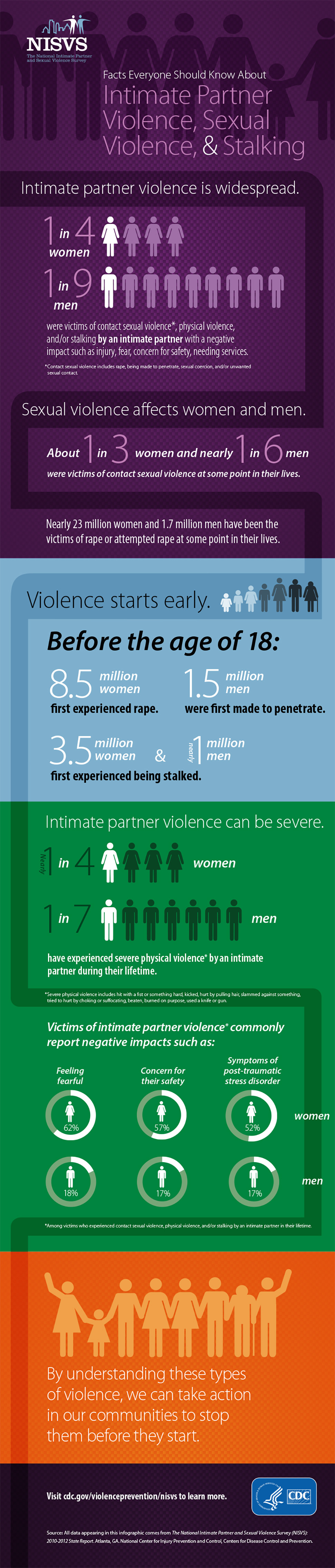
Below is a reminder of the scale of violence between intimate partners. This is an American organisation so the overall totals reflect that countries population but there is no reason to believe that the same ratio’s don’t apply in the UK. The EU wide survey published in 2014 documents one in three women (33 %) has experienced physical and/or sexual violence since she was 15 years old.

Infographic displaying latest statistics from the National Intimate Partner and Sexual Violence Survey 2010-2012. Shows key statistics on intimate partner violence, sexual violence, rape, violence experienced before the age of 18, and resulting negative impacts such as feeling fearful, concern for safety and symptoms of post-traumatic stress disorder among women and men in the United States.

Imposter syndrome

This article describes really well what happens with imposter syndrome.

In my experience it is very linked to emotional abuse; not just from parents and guardians but also siblings.

Siblings who resent the attention that another sibling gets can cause great damage with their jealously. When you end up feeling insecure and paranoid because of doing well at something it doesn’t help you grow into a confident and secure adult.

Gas lighting

Gas lighting takes away a persons ability to trust in reality and they can end up blaming themselves for the appalling behaviour of another person.

“If I was better/smarter/slimmer/kinder/quieter/cleverer/etc then they wouldn’t be so upset and frustrated with me”.

Other people can get pulled into it as well and can see the victim in the way the perpetrators wants them to so they miss the abuse that is happening.

This isn’t limited to gender roles either, despite the most common examples being reported as men abusing women. It also isn’t limited to partners; its a form of abuse that can occur with any type of relationship. Family, friends, work. I have worked with sibling abuse in this form and also adults who were raised by parents who did this.

It takes the victim time and space to trust their own perceptions again; to stop self blaming. They may never heal completely, but it is possible to bring about a lot of change.

https://www.independent.co.uk/life-style/health-and-families/gaslighting-and-how-can-it-change-a-victims-perception-of-reality-domestic-abuse-violence-a7347781.html

Sibling abuse – a parents story

I have found this incredibly moving piece on being the parent of a perpetrator and survivor of sibling abuse.

What is most distressing is the judgement the parents are experiencing and the lack of support and action by authorities. When will people take this abuse seriously? Why should the victims horrendous experiences be dismissed in this way because of the fact her abuser was her sister. As long as this keeps being swept under the carpet in this way nothing will change to tackle this dangerous form of abuse.

I Am the Mother of Both an Abuse Survivor and a Perpetrator

Gas lighting

I come back to gas lighting a lot as it is a form of emotional abuse I feel people need to be more aware of.

There are two things in this post that particularly strike me.

1 – being told how you feel. I wonder if people notice how common this is in everyday conversation, not ones that are necessarily deliberately manipulative. For example someone is telling an experience to a friend and will be answer with “you must feel..” or “you will be feeling…”. The more aware of it the more I notice it, both inside and outside my counselling room. What is it that makes us want to define someone else’s feelings rather than give them space to share them? Is it because listening might be too painful? Does this type of interaction which is incredibly common add to the lack of awareness of gas lighting and other forms of emotional abuse?

2 – feeling that being sensitive makes you unlovable. When did being sensitive become a weakness or indeed a personality flaw? Why is this un-acceptable in society? Sensitivity to me is about being in touch with your feelings and experiencing them all, whether painful or not. Yet admitting to feeling pain, hurt or upset is deemed wrong. It should all be swept under the carpet. I see a lot of damage caused by this where clients have to fit a mould and try and be something they aren’t to meet approval from others.

Sexual assault in College and University

The new year is starting and thousands of young people are going away to University and College for the first time. This should be a exciting, nervous and hopefully fun and rewarding time.

Sadly though there will be a lot of people who will suffer sexual assault. This article has the staggering statistic that 3 in 5 are assaulted or harassed. Revolt Sexual Assault is a UK based charity working to expose the scale and campaign for change. You will also find a list of support organisation for those who need it on their website.

Male domestic abuse

Its so important that male victims of domestic abuse are finally getting more attention in the news. This article details some of the statistics and difficulties men have accessing support due to how limited the resources are to help them.

It also has a link to an program that will be available on iPlayer from tomorrow and I am keen to watch that as well when it is released.

I am affiliated with an organisation, MenCASA which promotes awareness and training in this area for therapists. It also is a resource for clients to use to be able to find a counsellor to work with who will take their experiences seriously.